food-industry 
The importance of weighing in the food industry
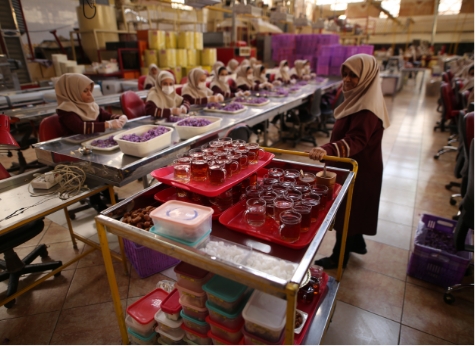
Various economic units such as fruit and vegetable fields, kobi rice industries, pistachio sorting, legumes, olives, rice mills, dairy products, drying raisins and food silos are defined in the food industry group.Food processing requires a wide range of weighing platforms from production to packaging and transportation of these materials. Fard Iran company’s precise and measuring instruments provide extraordinary accuracy in weighing ingredients at every stage of food production. Today, due to the importance of the food industry in our country and the economic crises that have occurred and the high value of food shipments, the necessity of using accurate and high-quality road scales is felt more than ever.
Weighing challenges in the food industry
Choosing the right type of scale for this class is very important in reducing the loss caused by poor quality weighing according to the environmental conditions explained belowIn the food industry, moisture from food and edible seeds and horticultural products causes acidification, which will eventually lead to surface corrosion. Therefore, the use of high-quality materials with anti-corrosion properties of weighing platforms in these industries is of great importance. Ferd Iran’s digital scale with prefabricated concrete is completely suitable for food industry products, and Ferd Iran company has guaranteed the efficiency of these scales for at least 70 years by using the best raw materials.

What is the appropriate tonnage of a road scale for the food industry?
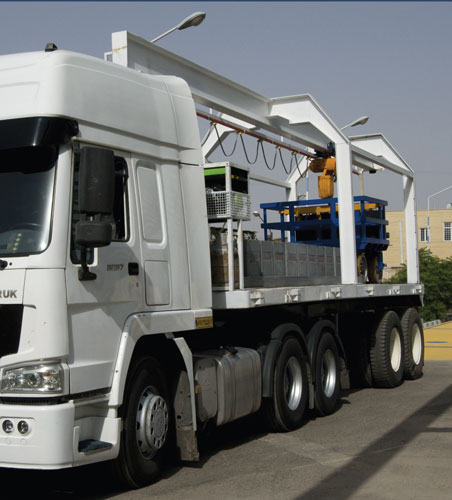
In the field of food industry activity, according to the volume of the company’s input and output materials, industrial owners usually use a 50-ton road scale or a truck scale, and in larger food industries, a 60-ton road scale or a trolley scale is used.

Which road scale installation model (in the ground or on the ground) is more suitable in the food industry?
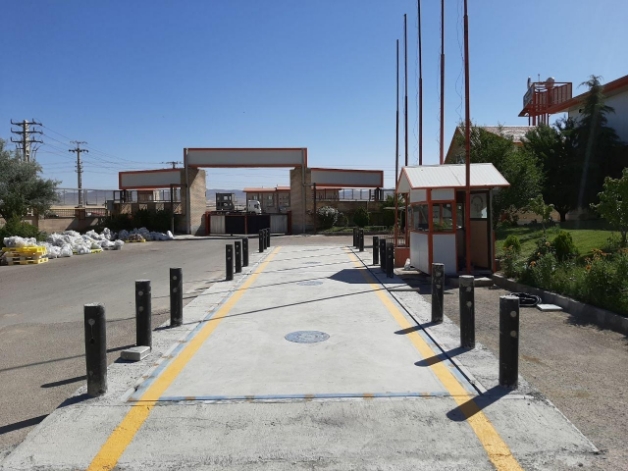
Due to the limitation of space in the food industry and with the provision of arrangements by Fard Iran Company for complete cleaning under the platform and around the scale, it is very common to use an indoor model scale or road scale at ground level. Sometimes, in industries that do not face space limitations, it is also possible to use a road scale model on the ground due to the ease of cleaning the scale area.

Which type of road scale (all metal or all prefabricated concrete) is more practical in the food industry?
Due to the high value of cargo in the food industry, the accuracy of the scale is of particular importance, and besides the high accuracy, the strength and durability of the scale and its useful life will be very important. Although all-metal scales are known as capital goods in the weighing industry, due to the need for constant washing and exposure to humid environments, the possibility of iron rust and corrosion increases, and also because the metal structure of these scales over time And due to bearing the load, they are bent, they have low durability and short life span, and as a result, a gross error is created in weighing.
All-metal road scales have high maintenance costs over time, so it is more appropriate to use prefabricated concrete scales in these industries. Due to the processing of concrete in completely standard conditions, precast concrete scales have very high strength and resistance, and standard installation prevents improper load distribution on the load cells.
Prefabricated concrete scales have a much lower cost than all-metal scales, which can be moved anywhere. If the installation site is ready and the prefabricated foundation is used, they can be installed and implemented in less than 3 days.
Why is it not recommended to implement all-metal road scales for the food industry?
Contrary to the general opinion of industrial owners, who look at metal scales as their capital goods, it is necessary to consider the following before buyingMetal scales, due to the extreme fluctuations in the price of iron in the market, and the high cost of these scales, usually impose irreversible costs on their owners, which are generally due to the depreciation of iron, its corrosion and rust, warping in Metal plates are not sellable after a few years and the value of its iron also drops drastically. They also incur significant maintenance costs over many years. Therefore, not only is it not considered capital, but due to the transfer of cold and heat to the load cells and the bending of the plates, it will lead to errors in weighing. As a result, the hidden damage of these types of scales will be much more than the investment to buy an all-metal road scale.